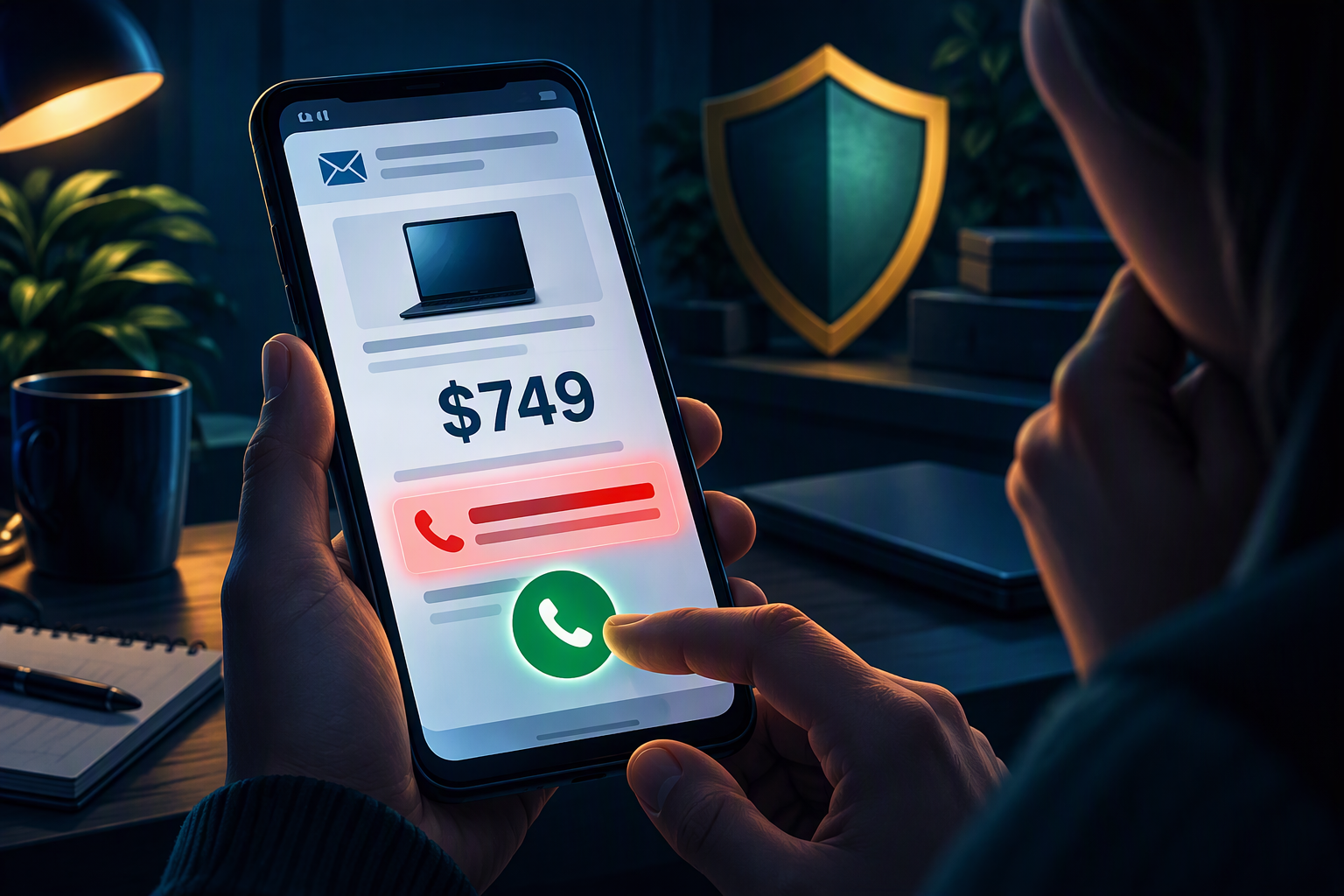
An email says you just bought a $749 laptop. You didn't. The message is polite, there's an order number, and the only way to cancel, it says, is to call the number at the bottom.
Your stomach drops, and that's the point. The number is the scam.
How the fake order confirmation works
The email looks like it came from Amazon, PayPal, Best Buy, Apple, or a "Geek Squad" renewal. It has a logo, an invoice, and a big dollar amount. There's no link to your account. Instead there's a phone number for "billing" or "disputes."
The FTC and the FBI both list fake order confirmations among the common holiday shopping scams, and they spike when everyone is expecting a pile of real receipts. In November and December you really are buying things. One more email doesn't look strange.
There are two versions. In one, you click a link or open an attachment, and you land on a fake login page or download something that steals what's on your device. In the other, which is more common, you call. That's where the real damage happens.
What happens when you call
A calm, professional person answers. They say they'll cancel the order, but first they need to "verify your account." Then it goes one of a few ways.
They say your account was hacked and ask you to install a remote access program so they can "secure" it. Once it's on, they can see your screen and your banking.
Or they tell you a refund was sent, but too much money went through by mistake. You need to send the difference back, usually by wire, gift card, or Zelle. The extra money never existed. The only real transaction is the one you make.
Or they simply ask for your card number to "reverse the charge."
None of these people work for the company on the email. They didn't need to hack anything. They needed you to dial.
Six signs it's fake
1. You didn't order it. Obvious, but panic makes people doubt themselves. If you don't recognize the purchase, that's information, not a reason to call.
2. The sender doesn't match. The display name says "Amazon," but the actual address behind it is a random string or a different domain. Tap the sender's name to see the real address.
3. The greeting is generic. "Dear Customer" or "Dear User" is a bad sign. Real retailers usually know your name.
4. The order number leads nowhere. Log in to the retailer's real site or app, typing the address yourself, and look at your order history. If it isn't there, it didn't happen.
5. It wants a phone call. Legitimate retailers send you to your account. They don't tell you to ring a number from an email.
6. The clock is running. "This charge will process within 24 hours" is there to stop you from thinking.
What to do instead
Don't call. Don't click. Don't open the attachment. Go to the retailer's website or app on your own and check your orders. Look at your bank or card statement too. If nothing was charged, you're done. You can delete the email and report it as phishing.
If you're curious about the phone number, run it through the Phone Number Investigator before anyone dials it. That's a safer way to find out than finding out by calling.
If you already called
Don't panic, and don't keep the call going. Hang up. If you installed anything, disconnect that device from the internet and uninstall the program. Call your bank right away using the number on your card, tell them what happened, and ask them to watch the account. Change your passwords from a different device. If you sent money or gave a card number, report it at ReportFraud.ftc.gov, and ic3.gov if the money moved by wire or Zelle.
This happens to careful people. A well-made fake plus a stressful week is enough.
Check it before you trust it
If something feels wrong, investigate it before you trust it. That's what Scamanot is for. Paste the link or the phone number from the email into the Is This Legit Checker or the Phone Number Investigator before you respond. We don't store your searches.
Scamanot provides information to assist your own judgment. We do not guarantee the accuracy of findings or the legitimacy of any entity investigated.
Not sure if something is a scam? Run it through Scamanot — free investigations available, no account required.
Investigate Something Now