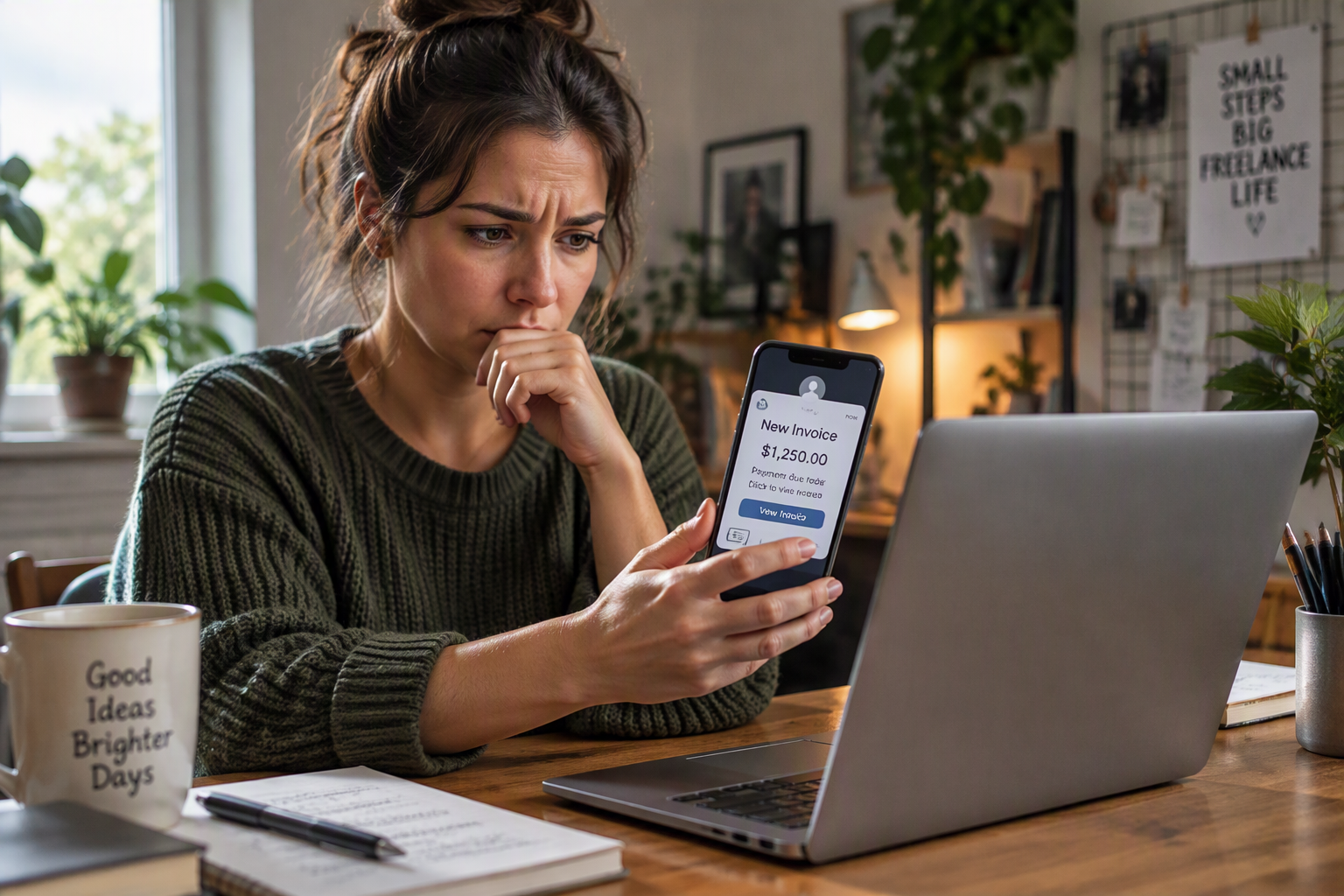
A new client just sent your first invoice request, except it's not from the client. It's from someone claiming to be their accounting department, asking you to resend your banking details "to update their records." You freelance. You don't have an IT department to ask. You don't have a security budget either, and most of the scam-checking tools you're finding online want you to buy an entire antivirus subscription just to ask one question: is this real?
That's the part nobody tells you when you search for a scam checker. A lot of what shows up isn't a standalone tool at all. It's a feature bundled inside a paid security suite, the kind built for people who want antivirus, a VPN, and identity monitoring in one package. If you just need to check one invoice, one message, or one new client's story before you respond, buying a full subscription to get there is a strange trade. You end up paying for a dozen features you didn't ask for, to get the one you actually needed.
This matters more for freelancers and small business owners than it does for most people, because you're the security department. There's no one to forward a suspicious email to and ask "does this look right to you?" Every invoice scam, every fake vendor, every client who turns out not to exist is a decision you make alone, usually while you're also trying to finish the actual work. Budget isn't a luxury question here. It's the reason a lot of people skip checking altogether and just hope for the best.
Here's what actually protects you without a subscription: a tool built specifically to investigate the thing in front of you, free, without requiring you to buy software you don't need for anything else. Ten checks a day covers almost anyone running a solo business, since you're not scanning your entire inbox around the clock. You're checking the handful of things that made you pause. A weirdly worded invoice. A new client who wants to pay by gift card "for tax reasons." A vendor email that's almost identical to one you've used before, except the account number changed.
The freelancers and small operators who get burned aren't usually the ones who never suspected anything. They're the ones who suspected something and then talked themselves out of checking, because checking felt like it required buying a security subscription they couldn't justify for one weird email. That gap between "something feels off" and "let me verify it" is where scams get through, and it's exactly the gap a free, purpose-built checker is meant to close.
There's a real difference between needing occasional protection and needing constant protection. If you're processing dozens of vendor payments a day for a growing business, an always-on security suite earns its cost. If you're a freelancer or a small operator checking the occasional suspicious message, you don't need to pay for background monitoring you'll rarely use just to get access to the one feature you actually need. Scamanot's free tier exists for exactly that gap: 10 investigations a day, no card required, and paid tiers only for people who genuinely check things often enough to need more.
None of this replaces your own judgment, and it isn't a guarantee. Scamanot provides information to assist your own judgment. We do not guarantee the accuracy of findings or the legitimacy of any entity investigated. But a fast, free second opinion beats talking yourself into ignoring the thing that made you pause in the first place.
If a client, a vendor, or an invoice is making you second-guess yourself, describe it to Scamanot before you respond. It's free, it's built for exactly this situation, and you don't need to buy anything else to use it.
Not sure if something is a scam? Run it through Scamanot — free investigations available, no account required.
Investigate Something Now